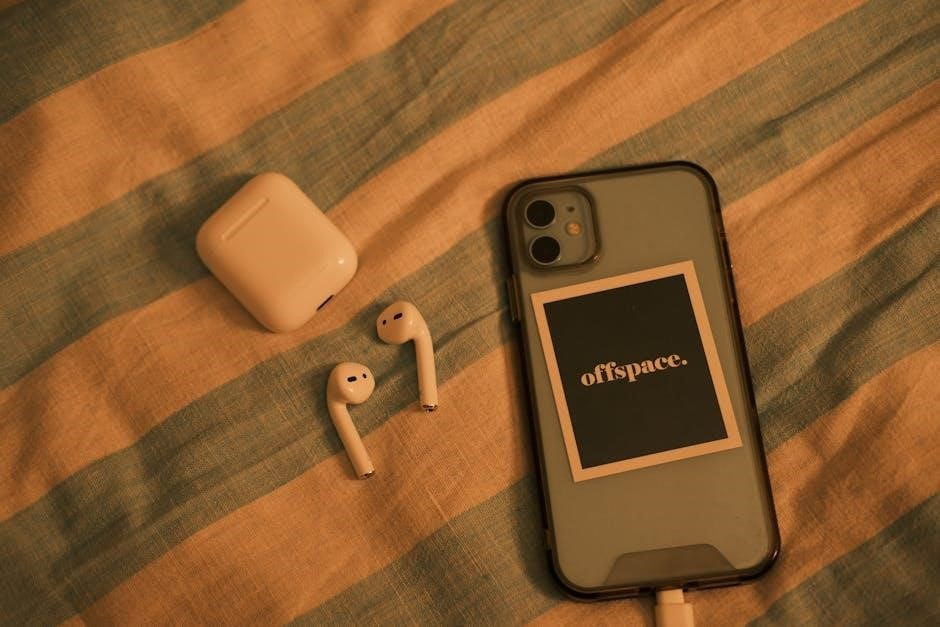
true wireless earbuds with charging case manual
True wireless earbuds offer freedom from wires, paired with a convenient charging case extending battery life. Understanding both components is key for optimal use.
What are True Wireless Earbuds?
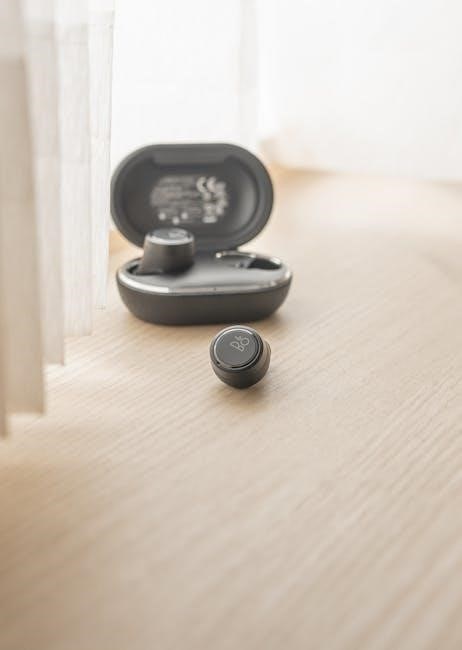
True wireless earbuds represent a significant leap in audio technology, completely eliminating cables – not just from the source device, but also between the earbuds themselves. Unlike traditional wireless headphones with a connecting wire, these earbuds boast independent left and right units, each containing its own audio driver and Bluetooth connectivity.
This design provides unparalleled freedom of movement and a sleek, minimalist aesthetic. They rely on a compact charging case for power, which serves as both a protective shell during transport and a portable power bank. The case typically utilizes a rechargeable battery, allowing users to enjoy extended listening sessions without needing a constant power outlet. They are designed for convenience and portability, making them ideal for active lifestyles.
The Role of the Charging Case
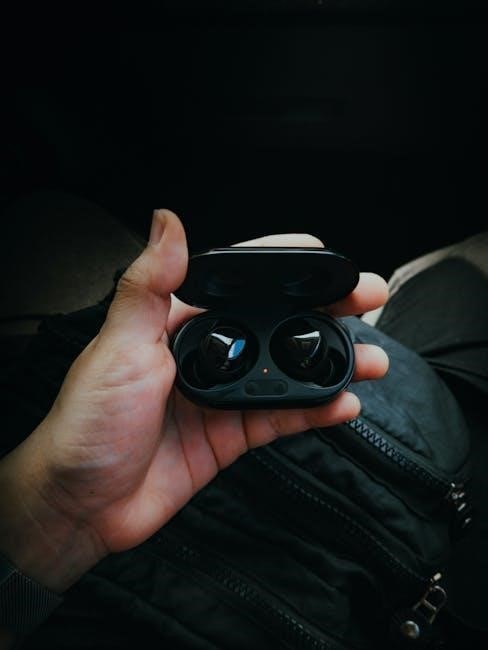
The charging case is integral to the true wireless earbud experience, functioning as more than just storage. It houses a rechargeable battery that provides multiple additional charges for the earbuds, significantly extending their overall playtime. When earbuds are stored inside, they automatically begin to recharge, ensuring they’re ready for immediate use.
Beyond charging, the case protects the earbuds from damage and loss. Many cases feature LED indicators displaying the case’s battery level and charging status. Some even support wireless charging, adding another layer of convenience. A fully charged case can often provide several full earbud charges, making it essential for extended use away from power outlets.
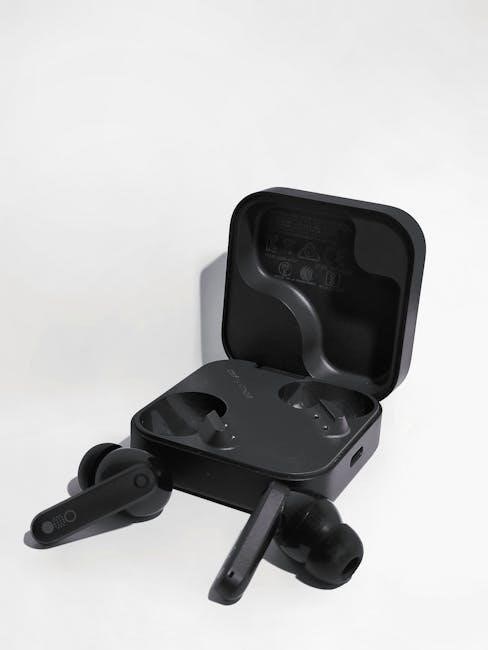
Understanding the Charging Process
Effective charging relies on a secure connection within the case, proper power source utilization, and awareness of battery capacity for optimal performance.
How Wireless Charging Works
Wireless charging, utilizing electromagnetic induction, offers a convenient way to power your earbuds’ charging case. A charging pad generates an electromagnetic field, and when the case is placed on it, this field induces a current within the case’s internal receiver coil. This current then replenishes the case’s battery.
However, the efficiency of wireless charging depends on alignment and power output. A 2A charger, even with multiple ports, may distribute power unevenly – potentially delivering only 0.5 amps per device when all ports are occupied. For optimal wireless charging, consider using a dedicated charging pad or ensuring minimal load on the charger. A fully charged case doesn’t instantly charge earbuds, but provides the necessary power reserve for wireless transfer.
Charging Case Battery Capacity & Lifespan
The charging case’s battery capacity dictates how many full earbud charges you’ll get before needing to recharge the case itself. Capacity varies between models, but a well-maintained case significantly extends your listening time throughout the day.
Over time, like all rechargeable batteries, the case’s battery lifespan will gradually decrease. Factors like charging habits, temperature exposure, and frequency of use contribute to this degradation. Avoiding overcharging and extreme heat helps maximize longevity. Regularly fully charging the case, when possible, can also help maintain optimal performance, ensuring consistent power delivery to your earbuds.
Charging Indicators: LEDs and Displays
Charging cases utilize LEDs or small displays to communicate charging status. A blinking light often indicates charging is in progress, while a solid light usually signifies a full charge. Different colors – like red, yellow, or green – can represent varying charge levels or potential issues.
Consult your device’s manual to understand the specific meaning of each indicator. Some cases feature more detailed displays showing percentage levels. Observing these indicators is crucial for confirming proper charging and identifying potential problems, such as a faulty case or earbuds not receiving power. Pay attention to these signals for optimal performance.
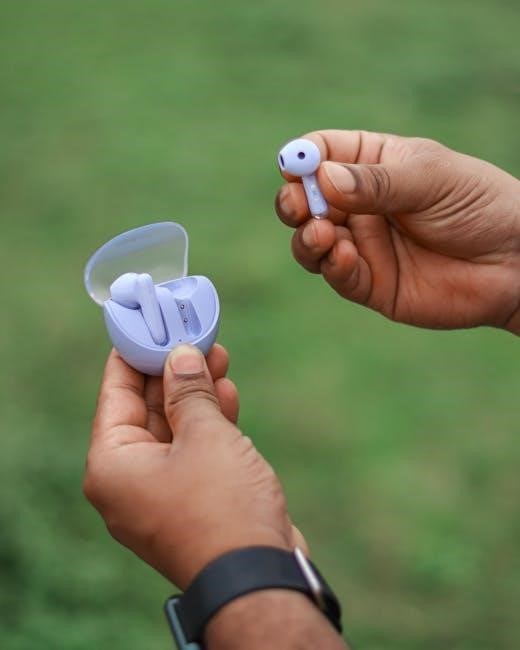
Troubleshooting Charging Issues
When earbuds fail to charge, common culprits include dirty contacts, case battery problems, or connection issues; quick fixes often resolve these problems efficiently.
Earbuds Not Charging in the Case: Common Causes
Several factors can prevent your true wireless earbuds from charging correctly within their case. A frequently encountered issue is dirty charging contacts on either the earbuds themselves or inside the charging case. Dust, debris, or earwax accumulation disrupts the electrical connection, hindering the charging process. Another common cause is a depleted charging case battery; if the case lacks power, it cannot transfer charge to the earbuds.
Connection problems between the earbuds and the case’s charging pins can also occur. Occasionally, software glitches or firmware issues might interfere with the charging cycle. Finally, physical damage to the charging pins, either on the earbuds or within the case, can prevent proper contact and charging. Identifying the root cause is the first step towards resolving the issue.
Dirty Charging Contacts: A Major Culprit
Dirty charging contacts are a primary reason why true wireless earbuds fail to charge within their case. Over time, lint, dust, earwax, and other debris accumulate on the metallic charging pins of both the earbuds and the charging case. This buildup creates a barrier, preventing a solid electrical connection necessary for efficient charging. Even a thin layer of contamination can significantly impede the flow of power.
This issue is surprisingly common, with reports indicating it resolves charging problems in approximately 70% of cases. Regularly inspecting and cleaning these contacts is crucial for maintaining optimal charging performance and extending the lifespan of your earbuds. A simple cleaning routine can often restore charging functionality.
Cleaning the Charging Contacts: Step-by-Step Guide
Step 1: Power off your earbuds and disconnect the charging case from any power source. Step 2: Use a dry, clean, soft-bristled brush (like a toothbrush) or a cotton swab to gently remove visible debris from both the earbud contacts and the case’s charging pins. Step 3: For stubborn residue, lightly dampen the brush or swab with isopropyl alcohol (90% or higher) – ensure it’s not dripping wet! Step 4: Carefully scrub the contacts, ensuring you reach all crevices.
Step 5: Allow the alcohol to completely evaporate before reassembling. Step 6: Reinsert the earbuds into the case and check if charging resumes. Repeat if necessary. Avoid using sharp objects or excessive force, which could damage the delicate contacts.
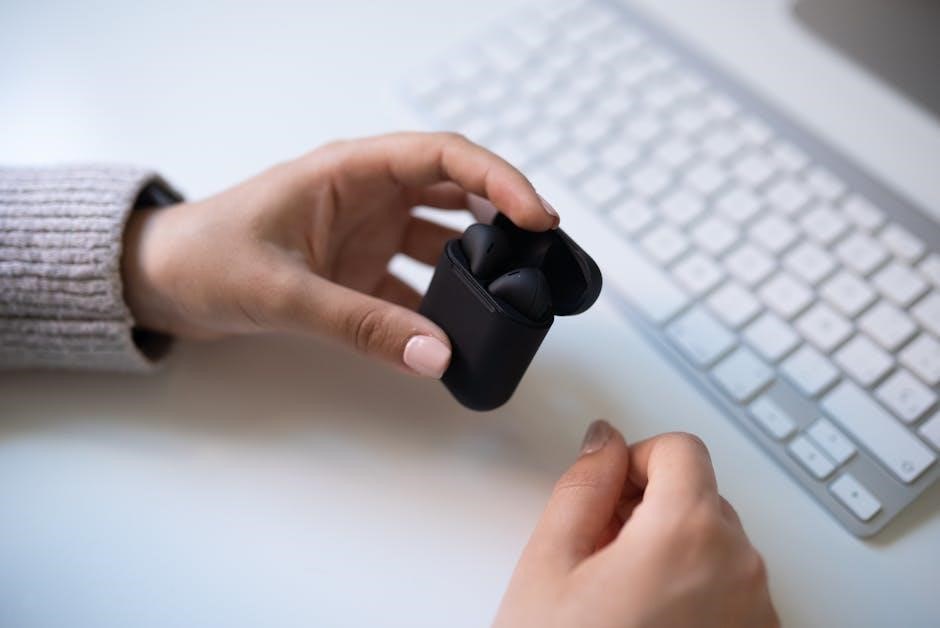
Charging Case Specific Problems
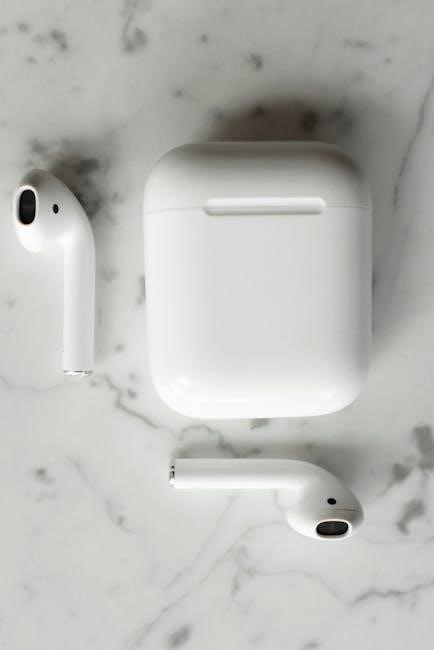
Issues like the case failing to hold a charge, slow charging, or complete malfunction are common. Identifying these problems is crucial for resolution.
Charging Case Not Holding a Charge
If your charging case isn’t retaining its power, several factors could be at play. The internal lithium-ion battery within the case degrades over time, diminishing its capacity to hold a full charge. This is a natural process, but frequent use and improper charging habits can accelerate it.
Ensure you’re using a compatible charger and cable; a weak power source won’t adequately replenish the case’s battery. Also, consider the age of the case – older cases are more prone to battery failure. A completely dead case might require a longer initial charging period to ‘wake up’ the battery. If the problem persists, the case may need professional repair or replacement, as internal battery issues are often beyond user-level fixes.
Slow Charging of the Charging Case
Experiencing sluggish charging speeds for your case? Several culprits could be responsible. Using a charger with insufficient amperage (less than 2A is often too slow) is a common cause. Try a different charger and cable to rule this out. Also, charging the case while simultaneously using it – for example, while earbuds are connected – can significantly slow down the process.
Multiple devices sharing the same charger can also divide the power, resulting in slower charging. Unplug other devices and dedicate the charger solely to the case. Finally, a dirty charging port on the case itself can impede a good connection; inspect and clean it carefully.
Identifying a Faulty Charging Case
Determining if your charging case is failing requires careful observation. If the case consistently fails to hold a charge, even after a full charging cycle, it’s a strong indicator of a problem. Similarly, if the case displays no charging indicators (LEDs or a display) when connected to a power source, it suggests an internal fault.
Another sign is if the earbuds aren’t charging at all when placed inside, despite the case seemingly having power. A bulging or physically damaged case should be discontinued immediately due to potential battery issues. If troubleshooting steps fail, the case likely needs replacement.
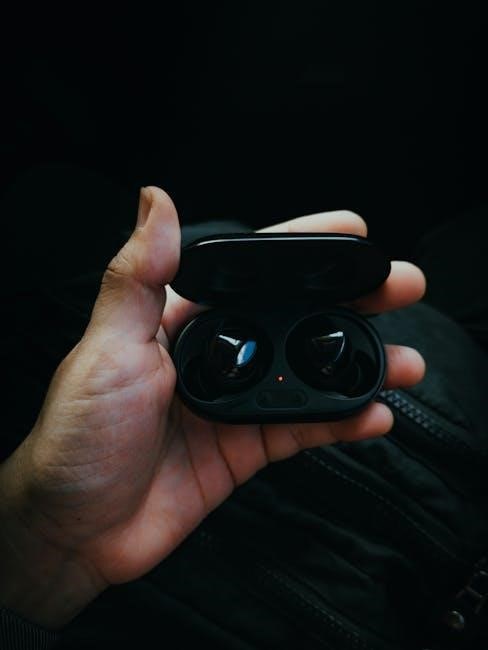
Advanced Troubleshooting
When basic steps fail, resetting earbuds or checking for firmware updates can resolve charging issues and ensure compatibility with your devices.
Resetting Your True Wireless Earbuds
If you’re experiencing persistent charging or connectivity problems, resetting your true wireless earbuds can often resolve the issue. The process varies by manufacturer, so consult your device’s manual for specific instructions. Generally, it involves placing the earbuds inside the charging case, holding a button on the case for a specified duration – often 10-30 seconds – until an indicator light flashes.
This clears the pairing information and restores the earbuds to their factory settings. After resetting, you’ll need to re-pair them with your smartphone or other devices. Resetting can fix software glitches preventing proper charging or communication between the earbuds and the case, effectively addressing many common issues.
Firmware Updates and Charging Compatibility
Maintaining up-to-date firmware is crucial for optimal performance and charging compatibility. Manufacturers regularly release updates that improve battery efficiency, fix bugs, and enhance connectivity. Check the companion app associated with your earbuds to see if updates are available; follow the on-screen prompts for installation.
Ensure your charging source (adapter, pad) meets the earbuds’ power requirements. Using a charger delivering insufficient power can lead to slow charging or failure to charge. Compatibility issues can also arise; some earbuds support specific charging standards. Refer to your manual for recommended chargers and avoid using damaged or non-certified accessories.
Charging Best Practices
Optimal charging involves avoiding complete discharge, using appropriate chargers, and preventing heat exposure to maximize battery lifespan and maintain performance.
Optimal Charging Habits for Longevity
To extend the life of your true wireless earbuds and charging case, adopt mindful charging habits. Avoid letting the battery completely drain before recharging, as this can degrade the lithium-ion battery over time. Instead, aim to top up the charge frequently.
It’s generally recommended to keep the battery level between 20% and 80% for optimal longevity. While modern earbuds have safeguards against overcharging, prolonged periods at 100% can still contribute to battery wear.
Consider using a power strip to easily disconnect the charging case when fully charged, preventing trickle charging. Consistent, gentle charging cycles are far more beneficial than infrequent, full-discharge cycles.
Using Different Chargers and Charging Pads
While most true wireless earbuds come with a specific charging cable, compatibility with other chargers exists. A 2A charger is often recommended for faster charging of the case, especially if multiple devices are plugged in simultaneously. However, avoid using high-wattage chargers not intended for small electronics.
Wireless charging pads offer convenience, but charging speed varies. Pads supplying limited power may take significantly longer to fully charge the case. Ensure a stable connection between the case and the pad for efficient wireless charging.
Using a quality charger and cable minimizes the risk of damage and ensures optimal charging performance.
Avoiding Overcharging and Heat Exposure
Modern true wireless earbud charging cases often feature overcharge protection, halting charging once full. However, prolonged connection to power isn’t ideal; disconnect the case when charged. Heat is detrimental to lithium-ion batteries.
Avoid charging the case or earbuds in direct sunlight or near heat sources. These conditions degrade battery health over time, reducing lifespan and performance. Don’t cover the charging case during charging, as this traps heat.
Optimal charging occurs in a cool, well-ventilated environment, preserving battery longevity and ensuring safe operation.
Safety Precautions
True wireless earbuds utilize lithium-ion batteries; handle with care. Avoid water damage, extreme temperatures, and physical impact to ensure safe operation and longevity.
Handling Lithium-ion Batteries Safely
True wireless earbuds and their charging cases rely on lithium-ion batteries, requiring careful handling. Avoid exposing the devices to extreme temperatures – both heat and cold can degrade battery performance and lifespan. Never attempt to disassemble or modify the battery pack, as this poses a significant safety risk.
If you notice any signs of battery damage, such as swelling, leaking, or unusual odors, discontinue use immediately and consult the manufacturer’s guidelines for safe disposal. Do not puncture, crush, or incinerate the battery. Always charge the earbuds and case using a compatible charger and avoid overcharging. Proper battery management ensures both your safety and the longevity of your wireless audio experience.
Water Damage and Charging Risks
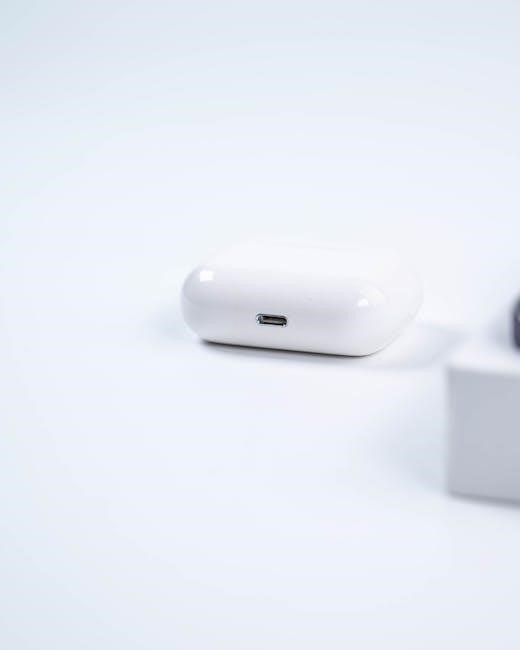
True wireless earbuds often have some level of water resistance, but the charging case typically does not. If your earbuds get wet, ensure they are completely dry before placing them in the case to charge. Introducing moisture into the charging case can cause corrosion and short circuits, potentially damaging both the earbuds and the case itself.
Never attempt to charge a wet charging case or earbuds. This creates a serious electrical hazard. If liquid spills into the case, disconnect it from power immediately and allow it to dry thoroughly before use. Water damage can void your warranty, so preventative measures are crucial for maintaining functionality and safety.
Resources and Support
For assistance, consult the manufacturer’s website for FAQs, warranty details, and repair options if your true wireless earbuds or charging case malfunction.
Manufacturer’s Website and FAQs
Your true wireless earbud manufacturer’s website is the primary resource for detailed support. Most sites feature extensive FAQs addressing common charging issues, pairing problems, and general usage. Look for dedicated sections on troubleshooting, often including guides for cleaning charging contacts – a frequent cause of charging failures.
Many manufacturers provide downloadable manuals in PDF format, offering comprehensive instructions. Explore the support pages for specific model information, as solutions can vary. Check for firmware update instructions; these updates can sometimes resolve charging compatibility issues. Don’t hesitate to utilize the website’s search function to quickly locate relevant information regarding your specific problem.
Warranty Information and Repair Options
Carefully review your true wireless earbud’s warranty information, typically found within the product packaging or on the manufacturer’s website. Understand the warranty period and what it covers – often including defects in materials and workmanship. Note any exclusions, such as damage from misuse or water exposure.
If your earbuds or charging case are malfunctioning and within the warranty period, contact the manufacturer for repair or replacement options. Many offer online claim processes or customer support phone lines. Be prepared to provide proof of purchase. If the warranty has expired, explore authorized repair centers or consider contacting the manufacturer for potential out-of-warranty repair services.