cafetera manual
Manual coffee makers, or cafeteras manuales, offer a traditional brewing experience, gaining popularity for portability and control over the coffee’s flavor profile.
What is a Manual Coffee Maker?
A manual coffee maker, often referred to as a cafetera manual, is a brewing device that relies on human effort – rather than electricity – to produce coffee. These devices encompass a diverse range, including the iconic Italian Moka pot, the immersive French press, and the precise pour-over systems.
Unlike automatic machines, manual brewers require active participation throughout the brewing process, from heating the water to controlling the pour. This hands-on approach allows for greater customization of brewing parameters, influencing the final cup’s strength and flavor. They are often portable and favored by coffee enthusiasts seeking a more deliberate and flavorful experience.
History and Evolution of Manual Coffee Brewing
The roots of manual coffee brewing stretch back centuries, predating electrical appliances. The Italian Moka pot, invented in 1933, revolutionized home brewing, offering a strong, espresso-like coffee. Before that, percolators and simple pour-over methods were common.
Over time, designs evolved, with the French press gaining popularity in the 20th century for its full-bodied brew. Today, a resurgence of interest in manual methods reflects a desire for control and a connection to the coffee-making process, embracing both tradition and innovation in cafeteras manuales.
Types of Manual Coffee Makers
Manual coffee makers encompass diverse methods like the Italian Moka pot, French press, pour-over systems, and traditional percolators, each offering unique brewing styles.
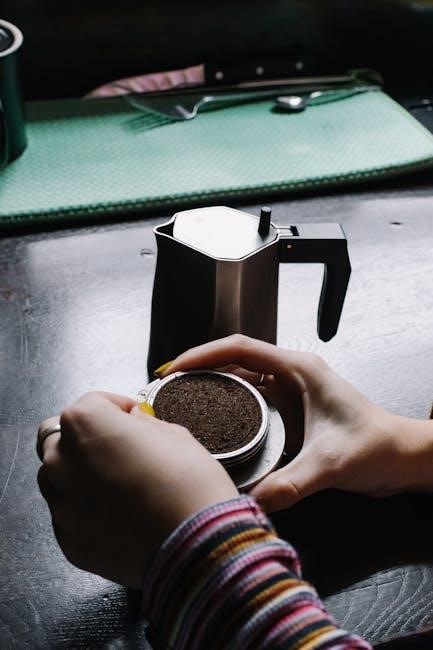
Italian Moka Pot (Cafetera Italiana/Moka)
The Italian Moka pot, also known as a macchinetta, is a stovetop brewing device celebrated across Europe for its ability to produce a robust and intensely flavored coffee. Operating on pressure, it forces hot water through finely-ground coffee, resulting in a brew similar to espresso, though distinct in character.
These pots, often made of aluminum, are prized for their durability and portability, making them ideal for home or travel use. The Moka pot delivers a concentrated coffee experience, offering a strong, full-bodied cup appreciated by coffee enthusiasts seeking a traditional method.
French Press
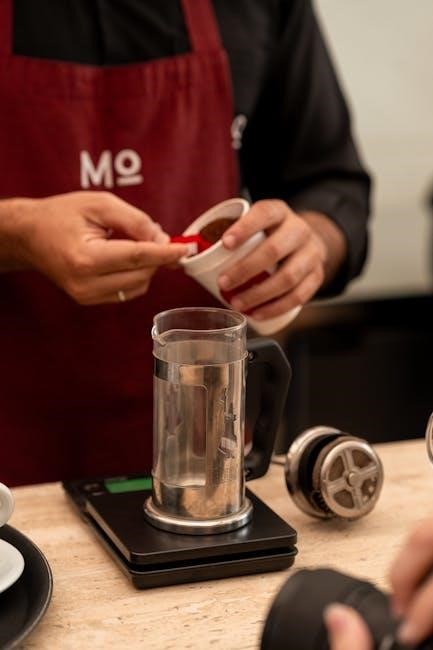
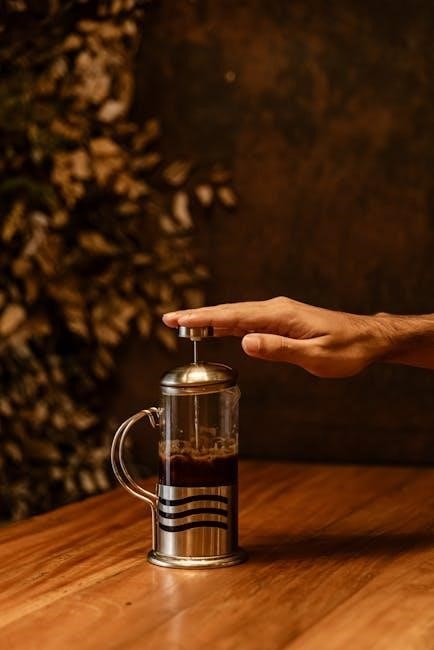
The French Press is a manual coffee maker renowned for its simplicity and ability to produce a full-bodied, sediment-rich brew. It involves steeping coarsely-ground coffee in hot water, then pressing a mesh filter down to separate the grounds from the finished coffee.
This immersion brewing method allows for greater control over extraction, resulting in a flavorful cup with a heavier mouthfeel. French presses are valued for their versatility, portability, and lack of reliance on paper filters, contributing to a more sustainable brewing process.
Pour-Over Coffee Makers
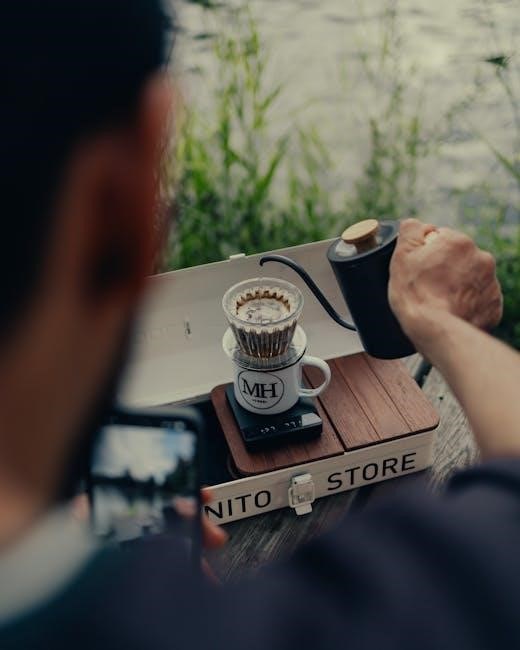
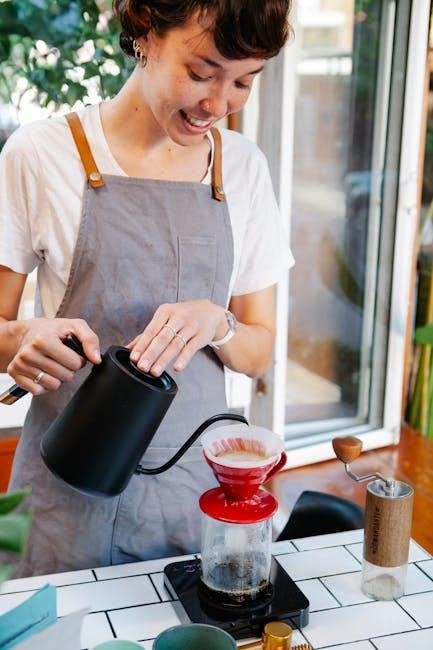
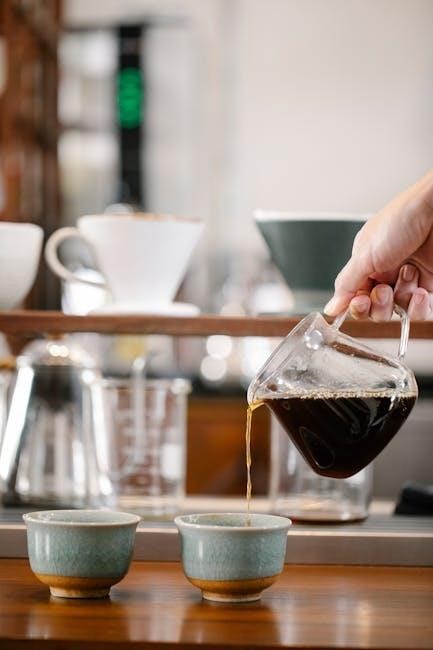
Pour-over coffee makers exemplify manual brewing precision, demanding a deliberate and controlled technique. Hot water is slowly poured over coffee grounds held within a filter-lined cone, allowing gravity to extract the flavors.
This method highlights the coffee’s nuanced characteristics, offering a clean and bright cup. Popular models like the Hario V60 are favored by coffee enthusiasts for their ability to customize brewing parameters, resulting in a highly personalized coffee experience.
Percolators
Percolators represent a classic, though sometimes debated, method of manual coffee brewing. They function by repeatedly cycling boiling water through coffee grounds, creating a robust, often bolder, flavor profile. While historically popular, percolators can sometimes over-extract coffee, leading to a bitter taste if not carefully monitored.
Despite this potential drawback, their simplicity and ability to brew larger quantities make them appealing for those seeking a straightforward, no-fuss coffee solution, particularly in outdoor settings.
Advantages of Manual Coffee Makers
Manual coffee makers boast portability, durability, versatility, and cost-effectiveness, offering a personalized brewing experience and control over coffee quality.
Portability and Travel-Friendliness
Manual coffee makers truly shine when it comes to portability, making them ideal companions for travel and outdoor adventures. Unlike bulky electric machines, many manual options – like the Italian Moka pot or a French press – are compact and lightweight. This allows coffee enthusiasts to enjoy a quality brew wherever they are, be it camping, at the office, or traveling abroad.
The ability to brew without relying on electricity is a significant advantage, especially in locations where outlets are scarce. Several models are specifically designed for travel, featuring durable construction and secure lids to prevent spills during transport. This convenience transforms any location into a personal coffee haven.
Durability and Longevity
Manual coffee makers are renowned for their robust construction and potential for long-term use. Often built with materials like stainless steel or aluminum – as seen in many Moka pots – these brewers can withstand years of regular use with proper care. Compared to automatic machines with complex electronic components prone to failure, manual options have fewer parts that can break down.
This inherent simplicity translates to increased durability and a reduced need for frequent replacements. With mindful cleaning and maintenance, a well-chosen manual coffee maker can become a cherished, long-lasting addition to any kitchen.
Versatility in Brewing
Manual coffee makers excel in their adaptability to different brewing preferences. From the strong, espresso-like coffee produced by Italian Moka pots to the clean, nuanced brews achievable with pour-over methods, a wide range of flavors are accessible. Users can experiment with grind size, water temperature, and brewing time to fine-tune their coffee.
This control allows for exploration beyond standard automatic settings, catering to individual tastes and enabling the brewing of various coffee types, offering a truly personalized experience.
Cost-Effectiveness
Manual coffee makers generally represent a significantly lower initial investment compared to automatic machines or espresso setups. Many models, like French presses and Moka pots, are available at affordable price points, making quality coffee accessible to a wider range of budgets.
Furthermore, they often lack the need for expensive proprietary filters or ongoing maintenance costs associated with more complex machines, contributing to long-term savings.
Disadvantages and Considerations
Manual coffee makers demand practice and user effort, potentially yielding inconsistent results due to a steeper learning curve and limited brewing capacity.
Steeper Learning Curve
Manual coffee brewing isn’t as straightforward as pressing a button. Achieving optimal extraction requires understanding variables like grind size, water temperature, and brewing time. Unlike automatic machines, there’s a degree of skill involved, demanding experimentation and patience. Initial attempts might result in underwhelming or bitter coffee, necessitating adjustments to technique.
This learning process, while rewarding, can be frustrating for beginners accustomed to the convenience of automated systems. Mastering a manual method takes dedication and a willingness to refine one’s approach based on taste and observation.
Requires More User Effort
Manual coffee makers demand active participation throughout the brewing process. Unlike automatic machines that handle most steps, you’re responsible for everything – grinding beans, heating water, precisely pouring, and monitoring extraction. This hands-on approach requires more time and physical effort.
There’s no automated shut-off or pre-programmed settings; consistent results rely on your attentiveness and technique. While some appreciate this control, it’s undeniably more labor-intensive than simply pressing a button for a quick cup.
Limited Capacity
Manual coffee makers generally brew smaller batches compared to their automatic counterparts. Many, like stovetop Moka pots or single-cup pour-overs, are designed for individual servings or a couple of cups at most. This can be a drawback when brewing for larger groups or needing a substantial amount of coffee throughout the day.
While some models offer slightly larger capacities, they still typically fall short of the 10-12 cup reservoirs common in automatic drip machines, requiring more frequent brewing cycles.
Potential for Inconsistency
Manual coffee brewing relies heavily on user technique, introducing a higher potential for inconsistency in the final cup. Factors like grind size, water temperature, pour speed (in pour-over methods), and tamping pressure (in Moka pots) significantly impact extraction.
Achieving a consistently delicious brew requires practice and attention to detail. Variations in these elements can lead to under-extracted, bitter, or weak coffee, unlike the automated precision of machines.
Manual vs. Automatic Coffee Makers
Manual coffee makers contrast with automatic machines, offering control and a ritualistic experience, while automatics prioritize convenience and consistent results with electric brewing.
Advantages of Automatic Coffee Makers
Automatic coffee makers excel in convenience, offering programmable features like timed brewing and automatic shut-off, simplifying the morning routine. They deliver consistent results with minimal user effort, ensuring a predictable cup every time.
Various capacities, from 5-cup to 14-cup models, cater to individual or group needs. Features like brew pause and energy-efficient brewing further enhance usability. While manual methods prioritize control, automatics prioritize ease and reliability for a hassle-free coffee experience.
Disadvantages of Automatic Coffee Makers
Automatic coffee makers, despite their convenience, can lack the nuanced control offered by manual methods, potentially limiting flavor exploration. They often require more counter space and can be pricier to purchase and maintain, as noted with espresso machines. Cleaning can be more complex due to multiple parts. While efficient, they may not match the portability of a simple Moka pot or French press, hindering coffee enjoyment on the go.
Brewing Techniques for Manual Coffee Makers
Optimal brewing relies on precise grind size, a correct coffee-to-water ratio, and carefully controlled water temperature for ideal extraction and a flavorful cup.
Grind Size and Coffee-to-Water Ratio
Achieving the perfect brew with a manual coffee maker hinges on understanding grind size and the coffee-to-water ratio. A coarser grind is generally suited for French presses, while finer grinds work best in Moka pots.
The ideal ratio typically falls between 1:15 and 1:18 (coffee to water), but experimentation is key to personal preference. Too little coffee results in a weak, under-extracted brew, while too much can lead to bitterness. Consistent measurements are crucial for repeatable results, ensuring a delightful coffee experience every time.
Water Temperature and Quality
Water quality significantly impacts the final taste of your manually brewed coffee. Filtered water is highly recommended, removing impurities that can detract from the coffee’s natural flavors. The ideal water temperature generally ranges between 195-205°F (90-96°C).
Water that is too cold will result in under-extraction, leading to a sour taste, while boiling water can scorch the grounds, creating bitterness. Precise temperature control enhances the coffee’s aroma and ensures a balanced, flavorful cup.
Brewing Time and Extraction
Optimal brewing time is crucial for proper extraction with a manual coffee maker. The ideal duration varies depending on the brewing method; French presses typically require 4 minutes, while pour-overs are faster, around 2-3 minutes.
Under-extraction occurs with too short a time, resulting in sourness, while over-extraction leads to bitterness. Monitoring the brewing process and adjusting time based on taste is key to achieving a balanced and flavorful cup of coffee.
Cleaning and Maintenance
Regular cleaning is vital for manual coffee makers, preventing build-up and ensuring optimal performance and flavor. Descaling removes mineral deposits effectively.
Proper Cleaning Procedures
Thorough cleaning after each use is crucial for maintaining your manual coffee maker. Disassemble all removable parts – filters, carafes, and funnels – and wash them with warm, soapy water. Rinse completely to remove any soap residue. For the main body, wipe down the exterior with a damp cloth.
Avoid abrasive cleaners, as they can damage the materials. Pay special attention to areas that come into direct contact with coffee grounds or water. Regularly inspect for any lingering coffee oils or residue, as these can affect the taste of future brews. Proper drying before reassembly prevents mold growth.
Descaling and Preventing Build-Up
Mineral build-up from water can significantly impact your manual coffee maker’s performance. Descale every 1-3 months, depending on water hardness. A solution of equal parts white vinegar and water is effective; run it through a brewing cycle, then rinse thoroughly with fresh water.
This removes calcium deposits, ensuring optimal water flow and coffee flavor. Consistent descaling extends the lifespan of your device. Using filtered water minimizes build-up. Regular cleaning, combined with descaling, keeps your cafetera manual functioning efficiently.
Popular Brands and Models
Bialetti is renowned for its Moka pots, while Bodum excels in French presses. Hario V60 pour-over models are also highly favored by coffee enthusiasts.
Bialetti Moka Pots
Bialetti, an Italian brand, is synonymous with the Moka pot, often called a cafetera italiana or macchinetta. These stovetop brewers utilize pressure to create a robust, espresso-like coffee. Constructed primarily from aluminum, Bialetti Moka Pots are celebrated for their durability and ability to deliver a concentrated, flavorful brew.
They’ve become a staple in European households, offering a convenient and relatively inexpensive way to enjoy café-quality coffee at home. Different sizes cater to varying needs, from individual servings to brewing for a small group, making them incredibly versatile.
Bodum French Presses
Bodum is renowned for its iconic French presses, a manual coffee brewing method celebrated for its simplicity and full-bodied results. These brewers involve steeping coffee grounds directly in hot water, then pressing a mesh filter to separate the grounds from the brewed coffee.
Bodum French presses are often made with durable glass beakers and heat-resistant plastic or stainless steel frames, offering both functionality and aesthetic appeal. They are valued for their ability to produce a rich, sediment-filled cup of coffee.
Hario V60 Pour-Over
Hario V60 pour-over coffee makers are a favorite among coffee enthusiasts seeking precision and control. This manual brewing method utilizes a cone-shaped dripper with spiral ribs, designed to facilitate optimal water flow and extraction.
Typically made of ceramic, glass, or plastic, the V60 requires the user to slowly pour hot water over coffee grounds, allowing for a customized brewing process. It’s celebrated for producing a clean, nuanced cup of coffee, highlighting the bean’s unique characteristics.
The Future of Manual Coffee Brewing
Innovations in materials and designs are enhancing manual coffee brewing, alongside a growing community passionate about the art of coffee preparation.
Innovations in Design and Materials
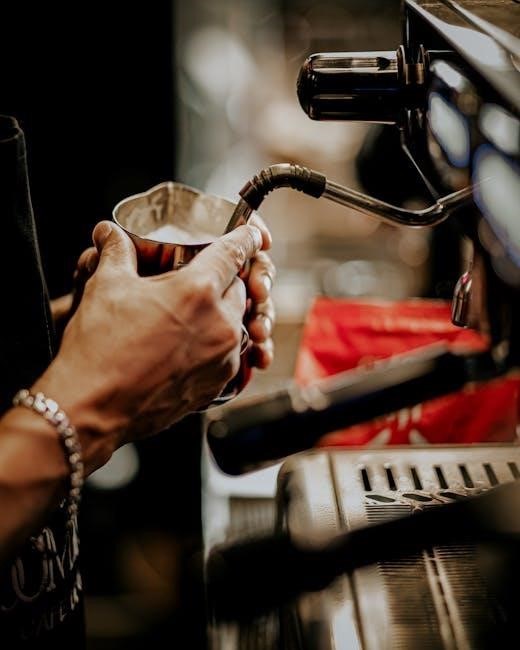
The evolution of manual coffee makers sees exciting advancements. Portable designs, like compact Moka pots for travel, are gaining traction, mirroring a desire for coffee on-the-go. Manufacturers are exploring durable, lightweight materials – beyond traditional aluminum – such as stainless steel and even innovative polymers.
Design tweaks focus on improved ergonomics and heat distribution for more consistent extraction. We’re also seeing a resurgence of aesthetically pleasing designs, blending functionality with visual appeal. These innovations aim to elevate the brewing experience, making manual coffee accessible and enjoyable for a wider audience.
Growing Popularity and Community
Manual coffee brewing is experiencing a significant resurgence, fueled by a desire for mindful consumption and a deeper connection to the coffee-making process. Online communities and social media platforms are thriving with enthusiasts sharing techniques, recipes, and reviews of various cafeteras manuales.
This growing community fosters learning and experimentation, driving innovation and appreciation for the art of manual brewing. Workshops and events are becoming increasingly common, further solidifying the passionate following and expanding the reach of this traditional method.